

If your pool’s pressure gauge had a voice, it would probably be yelling at you in full surround sound every time you walked by without looking. That little round dial is not just a decorative hood ornament for your filter system. It is the crystal ball of your entire pool setup, giving you glimpses into the future of either sparkling success or swampy disaster. Ignoring it is like trying to predict the weather by sniffing the air and hoping for the best. One glance at that dial can tell you whether your pool is heading toward glory or gearing up for a green monster invasion.

The pressure gauge might seem like a minor detail tucked away on top of your filter, but it holds the keys to the kingdom. If the numbers are off and you are not paying attention, it is like your pool is waving a giant red flag while you are too busy sipping lemonade and wondering why the water looks murkier every day. Understanding the pressure reading matters because it gives you an early warning system. It is like a poolside fortune teller whispering hey buddy, something shady is going down in the sand filter and you might want to check it out.
The big mistake rookies make is thinking they will just deal with problems when they are obvious. By the time your water turns from diamond clear to miso soup, your gauge has been sounding the alarm for days. Catching a pressure change early means fixing small problems before they balloon into wallet-draining disasters. Reading the gauge regularly is not about being paranoid. It is about being the wise and noble guardian of backyard aquatic awesomeness. Stick with me and you will see why this tiny dial deserves a front row seat in your pool care playbook.
What normal pool filter pressure really means and why it matters
When your pool filter pressure is behaving like a well-mannered golden retriever, it usually sits within a nice happy range determined by your system. This is called your clean starting pressure. It is the reading you get right after you backwash or clean the filter when everything is running smoother than a kid going down a Slip ‘N Slide. Normal pool filter pressure is the baseline number that says hey everything is cool in here, just keep swimming.
Knowing your clean starting pressure is not just a nice trivia fact to throw around at barbecues. It is critical because every little hiccup, clog, or system change is going to show up on that gauge. Think of it like your pool’s heart rate. If your heart suddenly decided to sprint up Mount Everest while you were just sitting on the couch, you would probably notice. Same goes for your pool. A pressure reading much higher or lower than normal means your filter system is struggling harder than a kid in floaties facing a tidal wave.
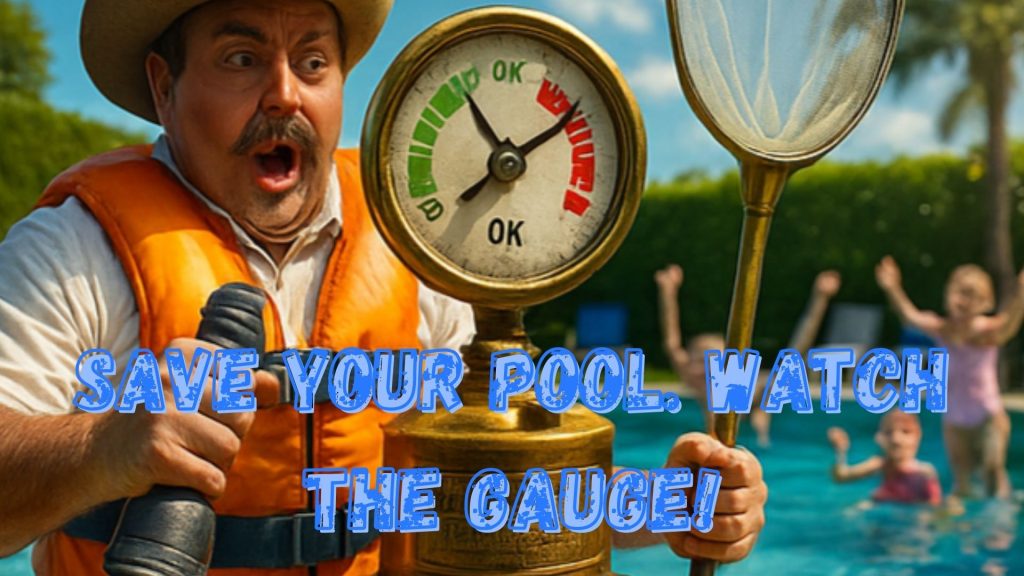
Most pools like to hum along somewhere between ten and twenty pounds per square inch, depending on your specific setup. But it is not the number itself that matters. It is knowing your own pool’s sweet spot and watching for sudden changes. Treat your pressure gauge like a loyal sidekick, always ready to alert you when something sneaky is trying to crash the party. Ignore it and you are basically inviting algae, cloudy water, and angry neighbors to your next pool bash without even realizing it.
Understanding your normal pressure helps you avoid overreacting too. A tiny blip is not cause to panic and start tearing apart your equipment pad like a deranged raccoon. Watch for consistent trends and big jumps. Patience and observation turn you from a rookie pool owner into a backyard legend. Your pressure gauge is not just a decoration. It is the life coach your pool desperately needs, pointing out trouble before it cannonballs into disaster. Click here to learn more about how to maintain other equipment in your pool system
The causes behind high or low pool filter pressure readings
When your pool filter pressure is acting up, it is like a drama queen tossing furniture around in a reality show meltdown. Something is definitely wrong behind the scenes. High pressure is usually your pool’s way of saying hey boss, I am trying to breathe through a clogged nose over here. It often means your filter is packed tighter than a suitcase before vacation. Dirt, debris, sunscreen sludge, and leaves have taken over the sand bed or cartridge like a mob of unruly tourists.
Low pressure is a whole different soap opera. If your pressure is suddenly lower than a limbo champion at a beach party, it could mean you have a suction side leak, a clogged pump basket, a skimmer blockage, or even an air leak somewhere between the pump and the pool. It is like trying to sip a milkshake through a straw full of holes. You are not getting much done and things start going sideways fast.

Ignoring these pressure swings is how little problems turn into major pool maintenance nightmares. A clogged filter trying to push water can cause pumps to overheat and pipes to crack. Low pressure from suction leaks can lead to pumps running dry, cavitating, and finally giving up the ghost completely. These are not the kinds of repairs you want to explain to your bank account after a careless summer.
Understanding the causes behind weird pressure readings turns you into a pool whisperer. You know when to backwash, when to clean baskets, when to check for leaks, and when to call in reinforcements before things spiral. The pressure gauge is the referee on the pool field and you ignore it at your peril. Read the plays correctly and you stay ahead of the chaos. Miss the signs and you are going to find yourself Googling pool pump replacement at two in the morning. Click here an learn more about why the right pressure impacts you pump.
How to respond quickly to pool pressure changes before damage happens
If you see your pressure gauge pulling weird stunts, do not stand there scratching your head like you just saw a unicorn. Move fast with a fix-feather-fast mindset. First, check if the pressure is high. If it is, immediately backwash your sand filter or clean your cartridge filter. Get that debris out before it starts plotting a hostile takeover of your circulation system. If backwashing does not solve it, inspect the return lines and filter media for buildup or damage.
If the pressure is low, head straight to the pump basket and skimmer basket. Clean them out like you are prepping for a royal inspection. Check for air leaks around the pump lid, valves, and fittings. Tighten anything that looks suspicious. Prime the pump if needed and make sure water is flowing steady and strong again. Think of it like giving CPR to your pool’s heartbeat before it flatlines.
Always keep a clean record of your pressure readings week to week. If you notice a pattern of frequent high pressure even after backwashing, it might be time to deep clean your filter media or replace old sand or cartridges. If you spot persistent low pressure issues, it could signal bigger plumbing problems that need quick intervention. The faster you act when pressure changes hit, the less likely you are to face expensive equipment repairs or total system breakdowns.
Rapid response pool care is what separates the backyard warriors from the sad tales of pool regret. Fast action saves your pool’s flow, keeps your summer rolling, and makes sure you are the one hosting epic cannonball contests, not algae funerals. Trust the gauge, move fast, fix-feather-fast, and laugh all the way back to your lounge chair.
Summary of why the pool pressure gauge matters how to understand readings what causes pressure changes and how to respond fast
Your pool’s pressure gauge is not an optional accessory. It is the secret oracle of pool health, giving you real-time updates on whether things are flowing right or crashing into chaos. Knowing your normal pressure lets you catch trouble early before the pool turns into a green science experiment. High pressure and low pressure both tell stories of clogs, leaks, and mechanical meltdowns waiting to happen.
By understanding what causes pressure shifts and how to respond quickly with fix-feather-fast action, you save yourself piles of money, time, and stress. The pressure gauge is not there for decoration. It is there to keep your backyard oasis from turning into a cautionary tale shared at the next neighborhood barbecue. A five-second glance at the dial could save you five thousand dollars and five hundred apologies.
Stay alert, stay sharp, and remember that when your pressure gauge talks, it is not mumbling. It is shouting valuable advice you cannot afford to ignore. Read it like your summer water bill depends on it, because spoiler alert, it does. Rooster Ray out and may your pressure always stay steady and your cannonballs always make the biggest splash on the block. Learn about How to choose the best pool filter by clicking here